Cherokee Ice House

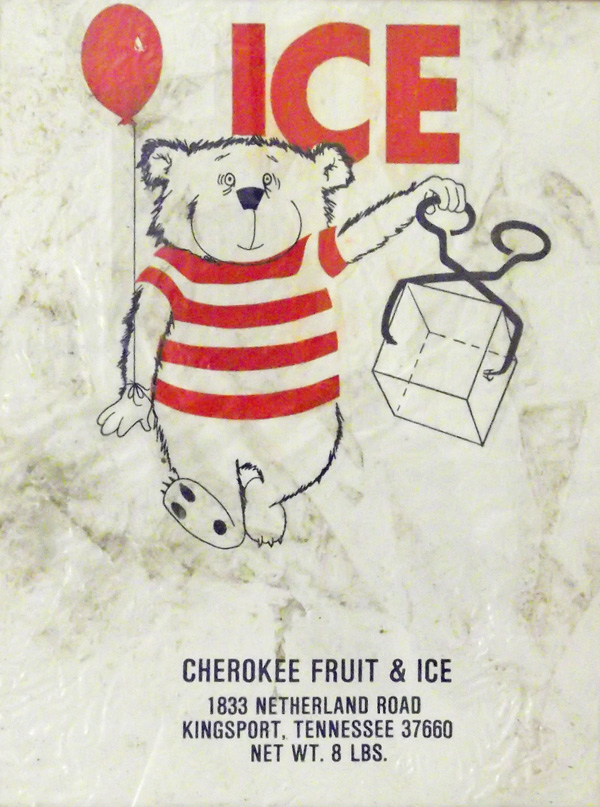
Cherokee Ice House was a long-time supplier of ice to homes and businesses in Kingsport. This is, I think (it is in a frame and I’m reluctant to take it apart), a wrapper for a bag of ice. A gallon of water weighs a little over 8 pounds, so this represents a gallon of ice, maybe. I don’t know from weighing ice…
This is what Cherokee Ice House looked like in 1977:
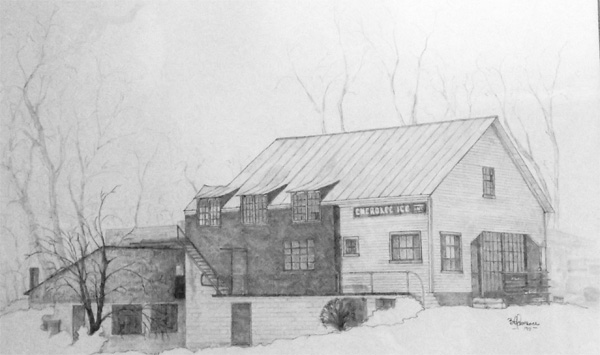
This drawing got me started on representing some of the buildings in and around downtown Kingsport. I did them in pencil, which gained me the comment, from a local art gallery, “Don’t you do anything in color?”.
Yes, I do, but I like doing buildings in black-and-white. Monochrome me.

I did a bit of research on this company. It appears to have been in business as early as 1922 (Kingsport Coal & Ice – they also made ice cream – began in 1917 on Main Street).
It was also known as “Cherokee Ice Plant, Old Kingsport”. Ice in the 1940’s was 60 cents per 100 pounds, 50 cents for commercial interests. There was a huge ice shortage in July of 1946. Ice had to be shipped in from as far away as Kentucky. Scott Roller owned Cherokee Ice in that year.
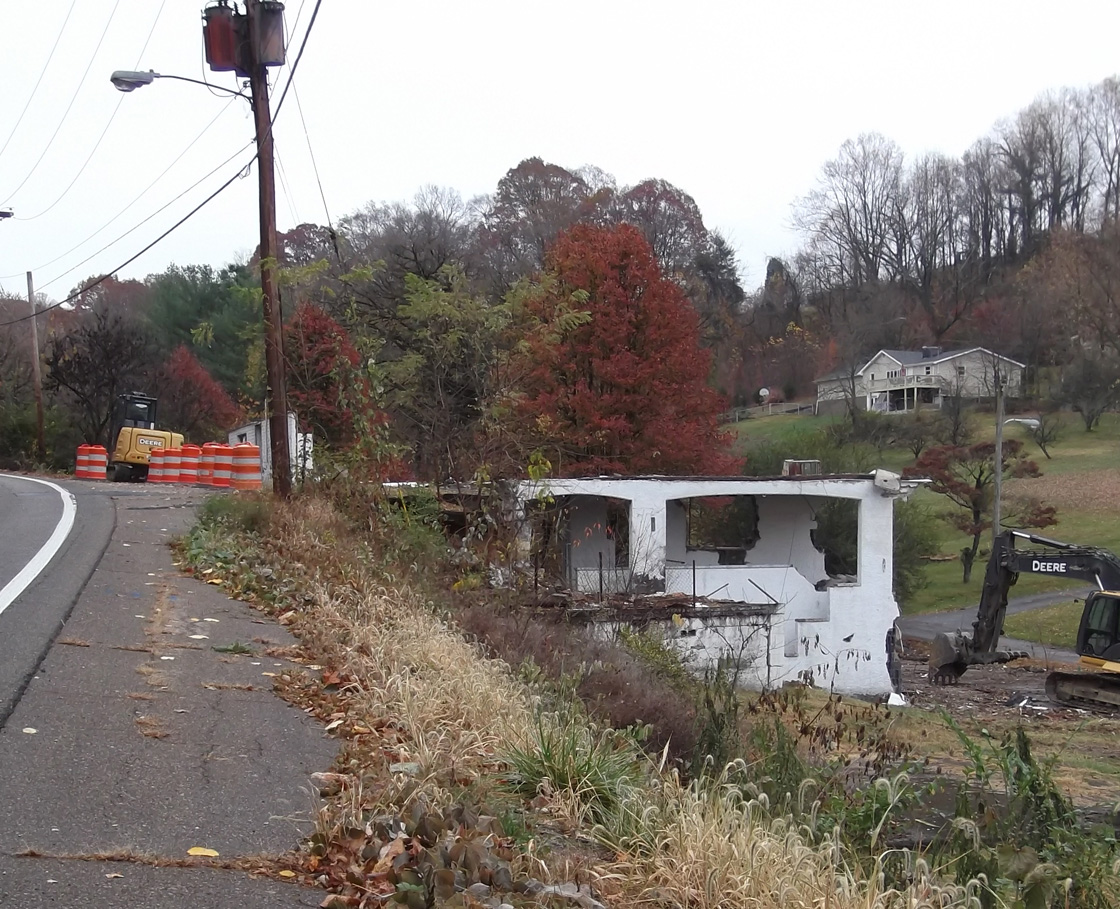
Original Honest John’s

As work progresses on the widening of Memorial Boulevard, the original home of Honest John’s gift shop and restaurant is going down. In 1954, “Honest John” Barker created “Kaw-Liga”, a 25-foot concrete depiction of a rather surprised looking “indian” in front of this structure. There was a speaker in the statue with which Barker would lure tourists in to shop his offerings. By 1960, the indian had been hauled up to the newly-created Stone Drive/11W/Robert E. Lee Highway where Barker continued the business until 1970 or so.
Other businesses occupied this building off and on. The only one I recall was Abe’s Pies, which supplied quite decent pies to restaurants in the city.

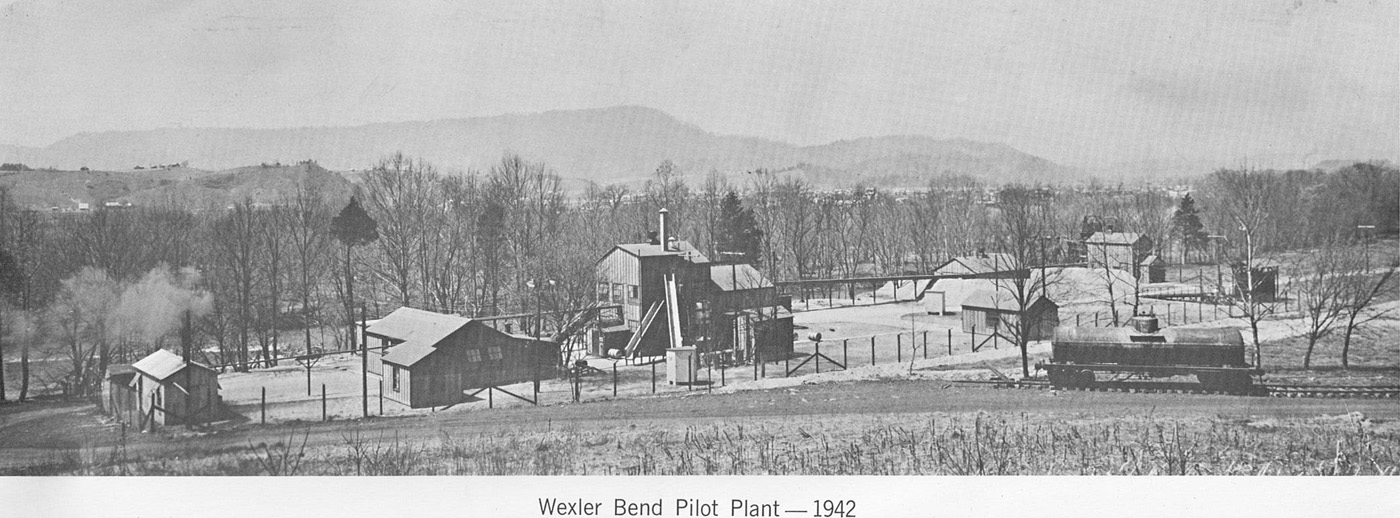
Wexler Bend Pilot Plant

Fifty hand-picked married men with at least one child Tennessee Eastman employees worked feverishly to develop the world’s most powerful explosive – RDX. The result was the large-scale production at Holston Defense (see The Secret History of RDX Colin F. Baxter, University Press of Kentucky 2018)
There is also a detailed history of this plant and the other plant at Horse Creek

:

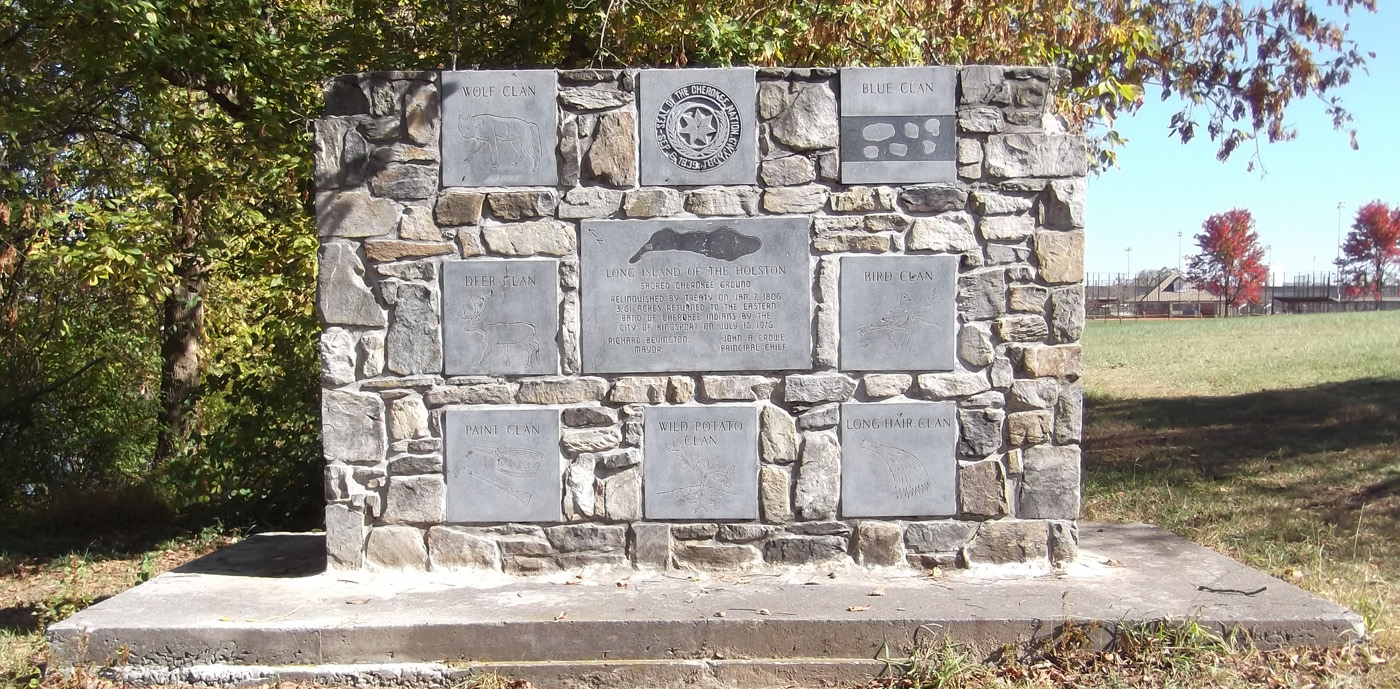
Cherokee Monument

This is on Long Island.
Top left: Wolf Clan Central: Cherokee Seal Top right: Blue Clan
Left: Deer Clan
The central plaque:
(an arrow indicating north then a silhouette of Long Island)
Long Island of the Holston
Sacred Cherokee Ground
Relinquished by Treaty on Jan. 7, 1806.
3.6 acres returned to the Eastern
Band of Cherokee Indians by the
City of Kingsport on July 16, 1976
Richard Bevington. John A. Crowe
Mayor Principal Chief

Central Right: Bird Clan
Lower right: Paint Clan Central: Wild Potato Clan Right: Long Hair Clan

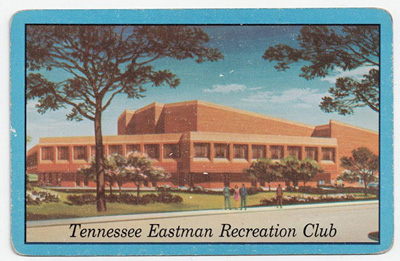
Eastman Playing Card

My buddy, He Who Finds Stuff Where I’ve Already Looked, dug this deck of cards up at an estate sale. The box is pretty worn and the cards have been played a lot, but it’s still in fairly good shape. Judging from the Joker design, the deck was made by Cartamundi, which had a presence in Kingsport from 1996 to 2007.

Books on Kingsport

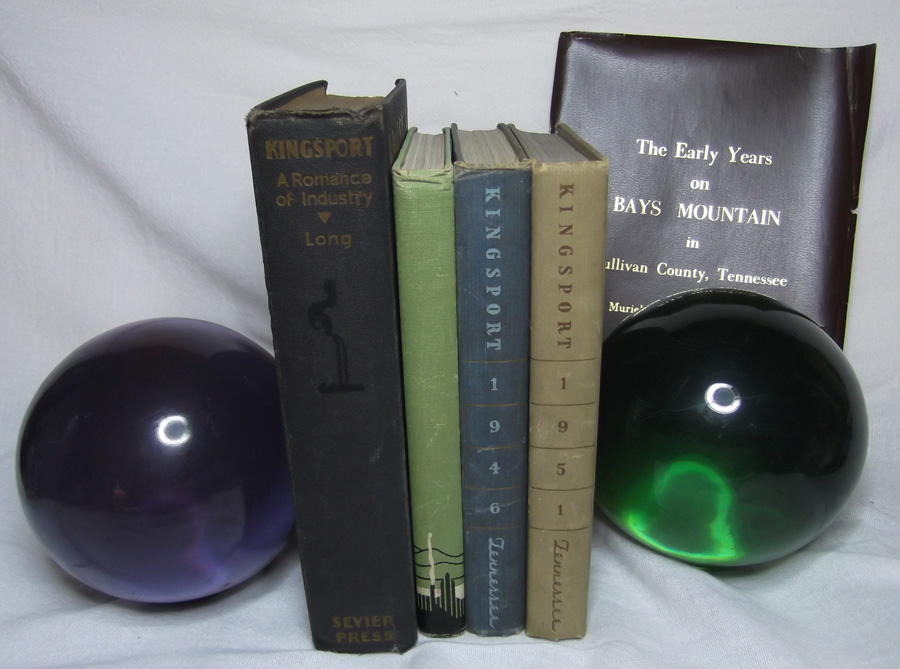
Four books and a pamphlet about Kingsport: (l to r) Kingsport: A Romance of Industry, by Howard Long. 1928 (Sevier Press); the Rotary Club 1937 green book of Kingsport with forward by J. Fred Johnson; the Rotary Club 1946 blue book of Kingsport with forward by C.P. Edwards, Jr.; the Rotary Club 1951 beige book of Kingsport with forward by William F. Freehoff, Jr.; and The Early Years on Bays Mountain, by Muriel Millar Clark Spoden. 1975 (privately printed). Except for the pamphlet on Bays Mountain history, these books are quite similar, most taking their lead from the Long book.
In my opinion, the best book about modern Kingsport’s history is Margaret Ripley Wolfe’s “Kingsport Tennessee A Planned American City” (1987, University of Kentucky Press), which I’ve commented on before.